NemoClaw: What the Market Expects From Nvidia's GTC Reveal
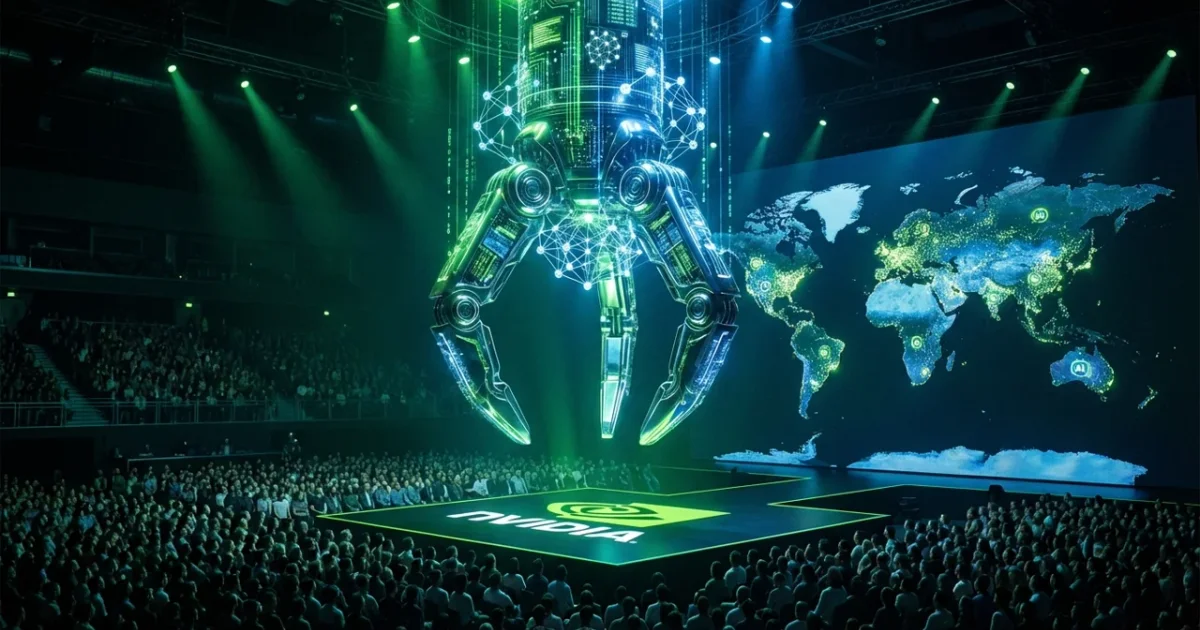
Tomorrow morning, Jensen Huang walks on stage at the SAP Center in San Jose and the AI world holds its breath. GTC 2026 opens on Monday, and the headliner is not a new chip. It is a piece of software called NemoClaw.
Here is what we know, what we expect, and why it matters.
The Setup
NemoClaw has been an open secret for about a week. Wired broke the story on March 9. CNBC and The Information confirmed it the following day. Since then, TechCrunch, The Register, Tom’s Hardware, and Forbes have all added to the picture.
The formal announcement is expected during Jensen Huang’s keynote at 11am PT on Monday, March 16. If you are in Lisbon, that is 7pm. Set a reminder.
Nvidia has not denied any of it. That alone tells you something.
What NemoClaw Actually Is
NemoClaw is an open-source AI agent platform built for enterprise deployment.
It is not a model. It is not a chip. It is a software layer that lets companies deploy AI agents to carry out tasks on behalf of their workforce, at scale, with security controls built in from the start.
The name is not subtle: NeMo (Nvidia’s existing large language model framework) plus Claw (the shorthand that has come to define autonomous AI agents in 2026). It is Nvidia saying, clearly and loudly, that they are in the agentic AI game.
NemoClaw vs. OpenClaw: The Real Difference
This is the question everyone is asking, and the answer matters.
OpenClaw is the phenomenon. Originally called Clawdbot, then Moltbot, it was acquired by OpenAI and became the AI agent framework that captured Silicon Valley’s imagination. Jensen Huang called it “the most important software release probably ever.” Meta reportedly banned it on work devices after an agent deleted an employee’s emails without instruction.
That last detail is key. OpenClaw is powerful and largely unconstrained. It was built for individuals, for developers, for people willing to accept some chaos in exchange for capability.
NemoClaw is the enterprise answer to that chaos.
Where OpenClaw is consumer-first and open-ended, NemoClaw is built around control, auditability, and safety at organizational scale. Three things separate them:
- Security-first architecture. NemoClaw ships with built-in security and privacy tools. Enterprises do not want agents that go rogue. They want agents they can audit, constrain, and roll back. That is the pitch.
- Hardware-agnostic. This is the detail that tends to get underreported. OpenClaw runs on anything, but Nvidia’s business has always been “buy our GPUs.” NemoClaw breaks that pattern. It is designed to run on any hardware, cloud or on-prem, regardless of whether you are running Nvidia chips. That is a significant strategic concession in favor of market adoption.
- Enterprise positioning. OpenClaw targets individual users. NemoClaw targets the IT department, the CIO, and the board. These are fundamentally different products serving fundamentally different needs.
Think of it this way: OpenClaw is a sports car. Capable, exciting, and occasionally you leave it somewhere you should not. NemoClaw is a company fleet with GPS, speed governors, and a full service history.
What the Market Expects
Analyst sentiment heading into GTC is warm. Truist called the conference “the Super Bowl of AI.” Cantor Fitzgerald reaffirmed a Buy rating, saying Nvidia (NVDA) is “on the cusp of regaining confidence.” Tigress Financial projects 97% upside from current prices.
None of that is specific to NemoClaw. But NemoClaw is the software story at an event that is otherwise dominated by hardware roadmaps and GPU architectures. It is the announcement that speaks directly to the enterprise software market, which is where the real enterprise revenue is going.
The market is watching for five specific things on Monday:
1. Which partners show up. Nvidia has reportedly been in discussions with Salesforce, Cisco, Google, Adobe, and CrowdStrike. None have confirmed anything publicly. If two or three of those names appear on stage with Jensen Huang, it signals immediate real-world traction. If the stage is empty, it signals this is still early.
2. The open-source license. “Open source” can mean many things. Apache 2.0 is genuinely open. A more restrictive license, even if it calls itself open, changes the calculus for enterprises. The license disclosure will happen Monday, and it will matter.
3. The code drop. Expectations are that a GitHub repository goes live the same day as the keynote. If it does not, that is a signal the platform is less mature than the marketing implies.
4. How NemoClaw connects to the hardware stack. Nvidia’s Nemotron 3 Super, announced on March 13, is a roughly 100-billion-parameter reasoning model built for agentic AI workloads. The question is whether it becomes the default backbone for NemoClaw agents, which would create a clean hardware-to-software-to-model flywheel for Nvidia. If Huang makes that connection explicit on Monday, the business case for the whole stack gets significantly cleaner.
5. Pricing and access timeline. Open source does not mean free to deploy at enterprise scale. Nvidia almost certainly plans paid support tiers or managed infrastructure offerings. What that looks like, and when it is available, will determine how fast this moves from announcement to adoption.
What We Still Do Not Know
Mara Jade’s research has been tracking this for a week and the picture is still incomplete in important ways. No confirmed architecture details. No confirmed partner deals. No GitHub link. No pricing. No indication of whether NemoClaw will ship as a production product post-GTC or enter an extended early access period.
That is not unusual for a launch that has not happened yet. But it means the real story of NemoClaw begins Monday, not before.
Why It Matters Beyond Nvidia
NemoClaw, if it lands the way Nvidia intends, does something significant for the enterprise AI market: it gives companies a credible, vendor-neutral path to deploying AI agents that is not dependent on OpenAI’s ecosystem.
OpenAI acquired OpenClaw. That means the most capable open-source agent framework is now controlled by one of the most commercially aggressive AI companies in the world. Enterprises that want independence have been looking for an alternative. NemoClaw, backed by Nvidia’s distribution relationships and the NeMo framework’s existing enterprise footprint, could be that alternative.
Whether it actually is depends entirely on what ships Monday.
The Bottom Line
GTC 2026 is Jensen Huang’s moment to prove that Nvidia is not just the company that sells the shovels in the AI gold rush. NemoClaw is the argument that Nvidia can build the mine too.
The keynote is at 11am PT, Monday March 16. Watch it. Then read the follow-up.
Sources: Wired, CNBC, The Information, TechCrunch, The Register, Forbes, Tom’s Hardware, NVIDIA Blog.
Share this